
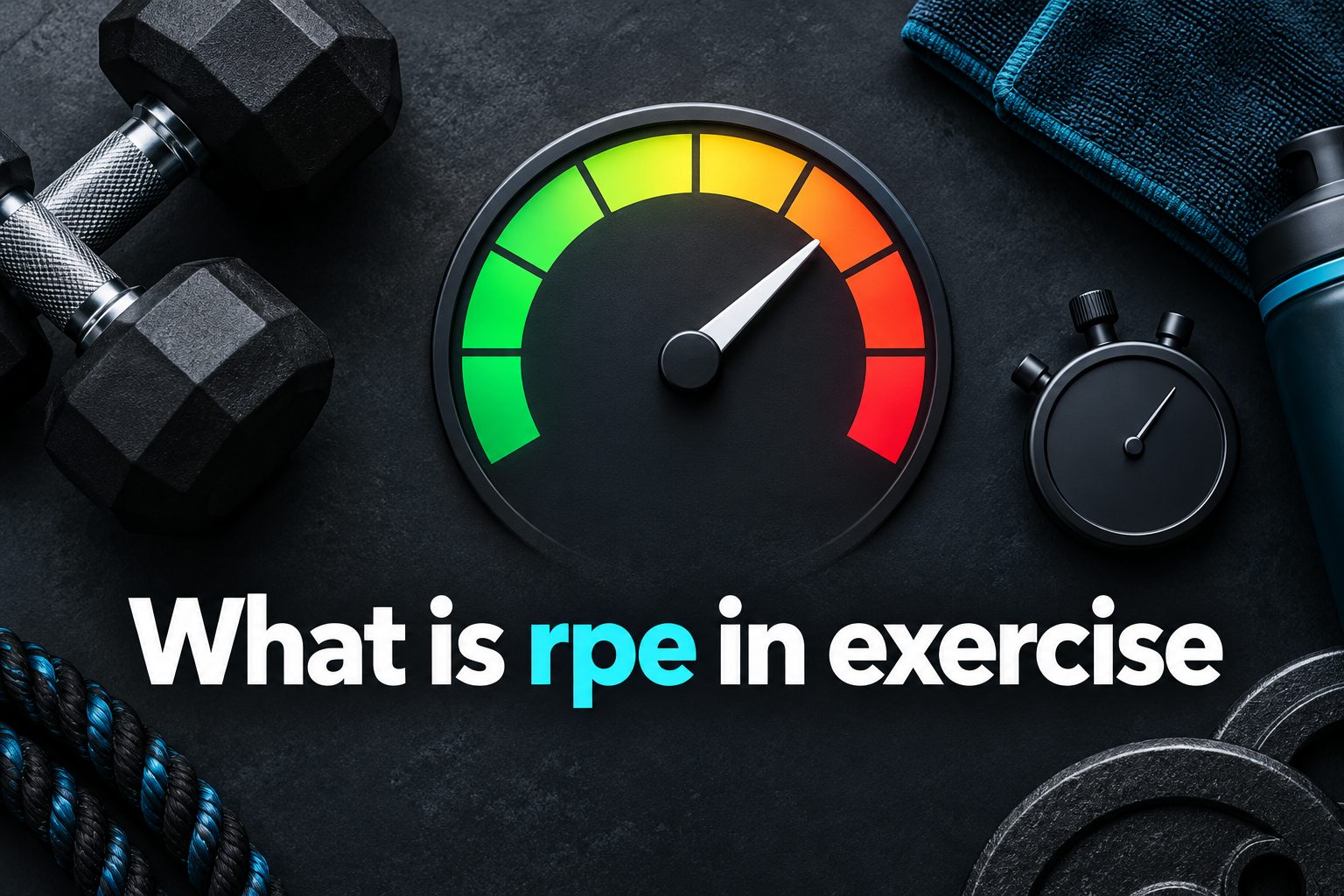
What is RPE in exercise? RPE stands for rate of perceived exertion, a simple scale that measures how hard a workout feels to you. Instead of relying only on a heart-rate monitor, pace, or the weight on a barbell, it asks you to judge your own effort.
RPE is useful because training stress changes from day to day. Sleep, stress, heat, recovery, nutrition, and experience can all make the same workout feel easier or harder. Learning to rate effort helps you adjust without losing the purpose of the session.
This guide explains how RPE works, why it matters, how to use it for strength and cardio, and which mistakes to avoid. You will also see practical examples that make the scale easier to apply in real workouts.
RPE is a subjective measure, but it becomes more accurate with practice. It does not mean guessing blindly; it means combining breathing, muscle fatigue, pace, focus, and the amount of work you could still do.
The scale most gym-goers use runs from 1 to 10. A low number represents very light effort, while a 10 represents an all-out effort with nothing left to give.
In resistance training, RPE is often tied to repetitions in reserve. If you finish a set at RPE 8, you likely believe you could have completed about two more clean repetitions.
In endurance training, RPE describes the overall challenge of a pace or interval. It can help runners, cyclists, and swimmers stay in the right training zone even when their devices give unreliable readings.
The goal is not to make every workout feel maximal. RPE gives you a language for matching your effort to the goal of each session, whether that goal is recovery, technique, muscle growth, strength, or speed.
How Does RPE Work During Exercise?
1. The Basic One To Ten Scale
On a 1-to-10 RPE scale, 1 is almost no exertion and 10 is maximum effort. Most productive training happens below 10. The number reflects the difficulty of the work at that moment, not how difficult the exercise looked on paper or how hard someone else found it.
2. Easy Effort Levels
An RPE of 2 to 4 feels easy to comfortable. You can breathe normally, speak in full sentences, and maintain the effort for a long time. Walking, gentle cycling, mobility work, warm-up sets, and recovery cardio commonly sit in this range.
3. Moderate Effort Levels
An RPE of 5 to 6 feels purposeful but controlled. Your breathing increases, and you need some concentration, yet you are not close to stopping. Many steady endurance sessions and moderate lifting sets fall here when the goal is movement quality or practice.
4. Hard Effort Levels
An RPE of 7 to 8 feels challenging and requires focus. In lifting, the final repetitions slow down but your form remains solid. In cardio, speaking becomes limited to short phrases. This range is popular for building strength and muscle while managing fatigue.
5. Very Hard Effort Levels
An RPE of 9 means you are close to your limit. You may have only one more good repetition in a lift, or only a short amount of time left at a fast running or cycling pace. It is effective when used carefully, but it creates substantial fatigue.
6. Maximum Effort
An RPE of 10 means no additional safe repetition or meaningful increase in pace was available. True maximum effort has a place in testing, races, and occasional advanced training, but using it constantly can harm technique, recovery, and consistency.
Why Is RPE Useful For Training?
1. RPE adapts to daily readiness, so you can reduce load when poor sleep, illness, or stress makes normal work unusually difficult.
2. RPE works without expensive equipment and can be used for weights, bodyweight exercises, running, cycling, swimming, and group classes.
3. RPE helps prevent ego-driven training because the focus shifts from proving strength to completing the intended level of effort.
4. RPE makes progression more flexible. You can add weight, repetitions, distance, or pace when the current work feels easier than the target effort.
5. RPE supports better recovery because easy days can stay genuinely easy instead of quietly becoming moderate or hard sessions.
Key RPE Cues To Notice
- Breathing: Notice whether you can talk comfortably, answer in short phrases, or can barely speak. Breathing is especially useful for estimating RPE during cardio.
- Repetitions Left: For strength work, estimate how many clean repetitions remain before failure. This is one of the clearest ways to connect RPE with lifting effort.
- Bar Speed: A bar or dumbbell that moves smoothly usually indicates lower effort, while a dramatic slowdown may signal that the set is nearing RPE 9 or 10.
- Technique: Effort rises when form starts to break down. Do not count a poorly performed repetition as proof that you reached the correct training target.
- Muscle Fatigue: Local burning or heaviness matters, but assess it alongside your ability to control the movement and continue with safe form.
- Mental Focus: Hard sets and intervals require more concentration. If you are distracted, rushed, or anxious, the same workload may deserve a higher RPE rating.
How To Use RPE In Your Workouts
1. Set A Target Before You Start
Choose the effort level that matches the workout goal before beginning the set or interval. For example, plan an RPE 6 recovery run, an RPE 7 squat set, or an RPE 8 rowing interval. A target keeps your decisions intentional.
2. Start Conservatively
When you are new to RPE, begin a little easier than you think is necessary. It is easier to add weight or speed after an accurate first set than to recover from starting too hard and turning a planned moderate workout into a maximal one.
3. Rate The Work After Completing It
Assess RPE at the end of a set, interval, or sustained block of exercise. Ask how much more quality work you could have done rather than judging only the discomfort you felt during the first few repetitions or minutes.
4. Adjust One Variable At A Time
If the effort is lower than planned, increase only one factor, such as load, repetitions, pace, incline, or duration. Small changes make it easier to learn how each adjustment affects your body and preserve the purpose of the session.
5. Record Your Ratings
Write down the exercise, load or pace, repetitions or duration, and final RPE. Over several weeks, these notes reveal progress. A weight that once felt like RPE 8 may eventually feel like RPE 6 at the same repetition count.
6. Use RPE With Objective Data
RPE does not need to replace other information. Pair it with heart rate, pace, sleep notes, and training volume when helpful. If your normal pace produces a much higher RPE than usual, the combination gives an early signal to adjust.
RPE in exercise is a practical way to measure how demanding training feels in your body. It turns personal feedback into a useful training tool for lifting, cardio, sports, and everyday fitness.
The most valuable skill is honest assessment. Use breathing, technique, repetitions in reserve, and overall fatigue to choose an effort rating rather than chasing a number for its own sake.
With regular practice, RPE can help you train hard enough to improve, easy enough to recover, and flexibly enough to stay consistent over the long term.
FAQs About RPE In Exercise
What does RPE stand for in exercise?
RPE stands for rate of perceived exertion. It is a scale used to describe how hard physical activity feels to you. The rating considers breathing, muscle fatigue, pace, focus, and how much more work you believe you could safely perform.
Is RPE the same as reps in reserve?
They are closely related in strength training but are not identical. Repetitions in reserve estimates the number of clean repetitions left, while RPE describes overall effort. A set at RPE 8 commonly means about two repetitions in reserve.
What RPE should beginners use?
Most beginners do well around RPE 5 to 7 for the majority of training. This range allows them to learn technique, build consistency, and recover well. Pushing to failure too often can make form less reliable and make training harder to sustain.
Should every set be RPE 10?
No. RPE 10 represents a true maximum effort with no additional quality repetition available. Most training benefits from leaving some capacity in reserve. Moderate and hard efforts can drive progress while reducing unnecessary fatigue and helping you repeat good sessions consistently.
Can RPE be used for running and cycling?
Yes. RPE is very useful for endurance exercise because weather, terrain, fatigue, and device errors can affect pace and heart rate. Easy efforts should allow comfortable conversation, while hard efforts limit speech and require sustained concentration.
How long does it take to learn RPE accurately?
Many people develop a useful sense of RPE within a few weeks of tracking workouts honestly. Accuracy improves when you compare ratings with actual performance, especially in lifting. Reviewing whether you truly had another repetition available helps calibrate future estimates.